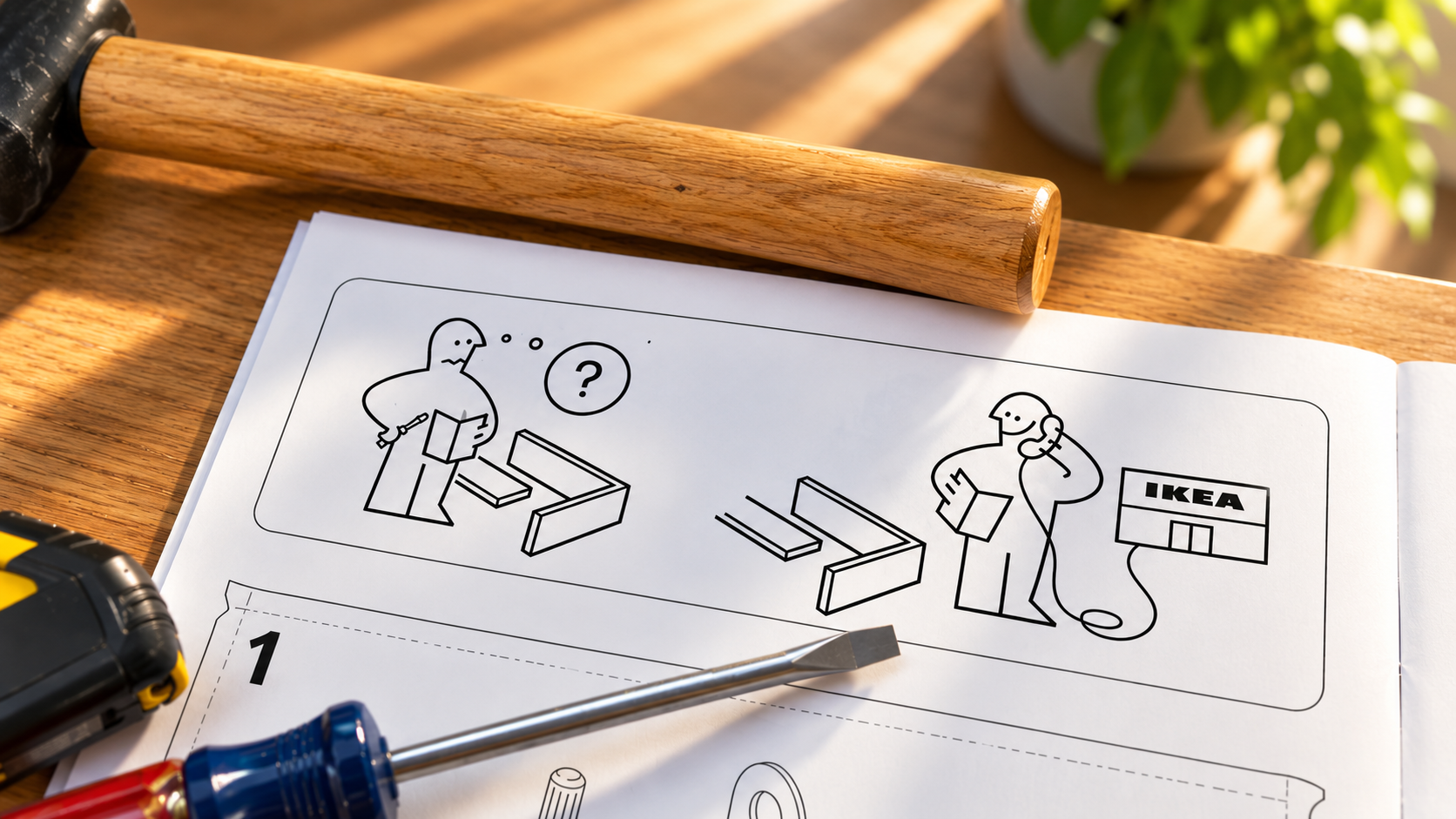
This weekend I assembled a nightstand. I cut open the IKEA box, surveyed my tools, studied the hardware pieces, and opened the instructions. It's what I saw before I got to step 1 that caught my attention as a learning strategist.
A small cartoon of a person holding the instructions with a question mark over their head. Then it showed the same person on their phone, connected directly to the IKEA store. That's their entire help system. No FAQs, no hours of operation. Just a clear universal visual that says "Need help? Give us a call, we're there for you whenever you need us."
Somebody made a deliberate choice to put that at the front. Most training puts that information at the very end. The last slide of a course, the bottom of a job aid, the "for more information, contact" line in smaller type after everything else. Basically as a last resort if you've screwed up here's how to contact us.
The end of the training is at the tail end of their attention span, and yet we're delivering possibly the most valuable thing in the whole lesson.
IKEA offers the same information with a completely different message.
It doesn't look like an afterthought, because it wasn't one. It's an offer of psychological safety. This may be my first build or my thirtieth, but either way I know I have a lifeline if I need one.
Putting that message at the beginning rather than the end changes the meaning.
I keep thinking about training materials handed to employees. Too often we walk them carefully through all the steps, and then somewhere near the end we mention where to go if they get stuck. The end of the training is at the tail end of their attention span, and yet we're delivering possibly the most valuable thing in the whole lesson.
After the lesson is over, most people won't remember the content. But many will remember where to look it up. If that's the durable outcome, I contend it shouldn't be the last thing we say.
So the next time we build training that offers support when someone hits a roadblock, make it the lead message. Design it as carefully as everything else. And make sure that when someone takes us up on it, the answer is on the other end.